


The 7P’s, if you don’t know about them already, once you do you will use them.
I use them everywhere; when I am training new people, starting new projects, or subconsciously in my day to day life.
Proper Preparation and Planning Prevents Piss Poor Performance
I use this so much it’s the first thing I think of when working on a new project.
But why is this so important?
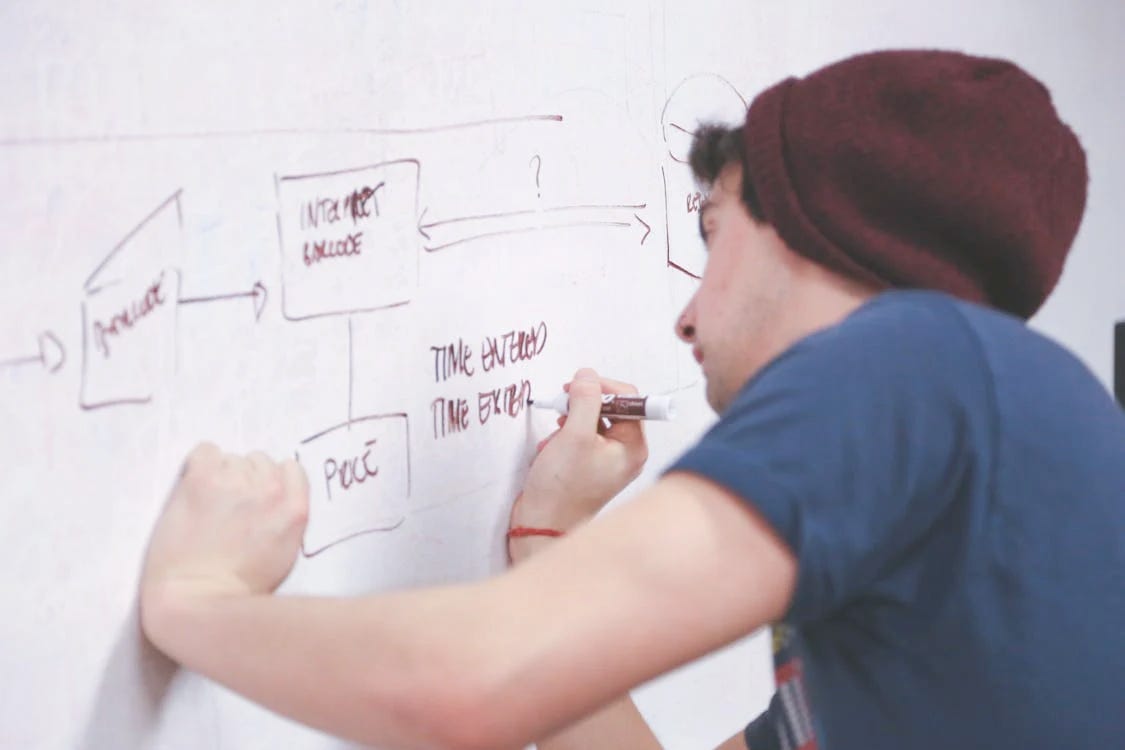
Time spent in preparation and planning is never time wasted.
Too often when we start something new, the excitement and the adrenaline means that we rush into things. We want to make progress, and we want to do it now. The issue is, by running straight into things, we may make mistakes that were completely avoidable if we had have thought first.
There are a whole bunch of adages and sayings regarding this, so many you would think it obvious - The old bull and the young bull, Measure twice cut, smooth is fast and fast is smooth, once to name a few.
All of these essentially try to convey that taking the time to make a plan or moving in a considerate manner is never a bad idea.
Professionally there will always be pressure to deliver results, and more than ever there is pressure for these results to almost be immediate. However, by taking the time to plan and strategise you will be able to handle unexpected events better than if you didn’t plan.
Right, planning done. Never need to do that again.
A mistake I see people often make is that they only plan at the beginning of a project; because that’s when you make a plan, right? No, you should plan regularly because when we can only ever plan with the information in front of us at the time.
During the execution of the plan, we (hopefully) uncover new information; and this information is always valuable. This new information should be studied regularly to identify what we do next, and when we make those decisions we are changing and evolving our plan.
There is a phrase that I use, that I bastardised from another one that I didn’t!
If I knew then what I know now, I would still have done what I did, because I didn’t know it then and I’m not a psychic.
Tough learnings or things which poke holes in your plan aren’t a bad thing, humans learn more through failure than success; however is there a way to minimise the chance of your planning blowing up in your face? Yes.
Everyone’s experiences are different and that makes them valuable
In a previous post on TMBA we spoke about Change Management, and in particular Change Detractors. Quite often when doing something new, people avoid those who are against the change, when in reality they are incredibly valuable. They can help identify areas you need to focus on, and if they are brought into the change management can help identify routes to success.
In the same way, bringing in people who are sceptical to a plan - or those who have different viewpoints - are going to improve the quality of your plan. You will still encounter things you didn’t know, but you will be able to understand the landscape in front of you better.
If you can see potential issues ahead, you can implement crisis planning. If you see resistance, you can plan for a change management strategy. All the inputs in the planning stage allow you to be prepared for what you might face.
However, you can’t plan forever.
A bad plan well executed, is better than a good plan never done.
It is easy when planning to obsess over making sure you are covered for every possible eventuality. Too often plans go into too much detail, when in reality the focus shouldn’t be on “how to fix issues” but rather (at least in my opinion) “how do we give ourselves the time to fix the issues”
If you try to plan for everything, what can happen is you end up planning for so long that by the time you go to act, parts of your plan are no longer valid; so you need to go back and fix them. Which means that you never actually do anything, just plan.
Now for some, this is brilliant. Can’t fail if you never try! Right?
Whilst that is true, it isn’t a great outlook to have.
My advice is to take at most one week to construct your plan, then get to delivery
How to plan
There are multiple ways, and there is no one perfect way to do so, but let me talk you through how I go about planning for any project. I get a document/sheet of paper/whiteboard whatever, and start writing down answers to these questions.
What do we want to do? Hopefully obvious why this is here :D
What value are we wanting to deliver? Focus on the reason why you are doing something
What does success look like? You can’t determine when a plan is successful or not if you don’t know what success looks like
When do we want to start? Gives you a timeline for finishing planning, and is also key in terms of resource allocation and feeding into other plans
When do we want to finish? Same as above
What problems could we encounter? Looking ahead to see if there are any parts of your plan that need adapted
How can we handle these problems? Starts you thinking about mitigation strategies and whether you have the resources you need
When do we review this plan? Gives points at which you can reassess the plan
Whilst it is not perfect by any stretch of the imagination, what this allows is the ability to not only think about what you are wanting to do, but get feedback from other people on what you are wanting to do.
The whole point of this article is to get you thinking about how you can plan, and there may be a better way for you to plan. The key thing is that a plan is not a script, it is a strategy; and good strategies are always fluid and flexible.
The essence of a good plan is flexibility
Whenever I talk about planning, the risk is that people slavishly stick to the plan even when it’s going wrong. Which is the wrong way to look at things.
There is a quote that was ridiculed at the time, but is remarkably useful.
“Reports that say that something hasn't happened are always interesting to me, because as we know, there are known knowns; there are things we know we know. We also know there are known unknowns; that is to say we know there are some things we do not know. But there are also unknown unknowns—the ones we don't know we don't know.”
Dick Cheney
Whilst not directly applicable to planning, because it talks about events that have already happened, we can look at it from the other side. We can’t plan for everything, and if our plan is too rigid it will fail when we encounter something we couldn’t have expected.
So what do we do? We review our plan and we try as much as possible to put strategies in place to allow our plan to adapt.
Planning is not an excuse to not act.
As technicians, we may think that planning is something that project managers are responsible for. However, even in deliver and action planning can be remarkably valuable.
This value isn’t just in resourcing, but also for protecting your team or advocating for more time or resource. Showing the logic and approach to delivering something is almost a universal language in business, it doesn’t need to be technical and can be a critical communication tool.
The key takeaways I want you to have from this article are: Planning is valuable even under immense time pressure, planning is a tool to help you deliver (even under immense pressure), planning is a tool to help - never an excuse to not act.
As with many topics I cover on TMBA, there will be many different ways to plan; and it’s on you to find the one that works best for you.
In my experience though, planning is a not so secret weapon that we fail to use because it’s seen as not delivering anything - even though it helps you to deliver more effectively.
Grand, Thanks for your time.